
I want to preface this by saying that I was raised Catholic, but I am currently not very religious. I am, however, a believer in stories and storytelling. I loved Chaya’s post, Purim, because it was a story I wasn’t entirely familiar with and she told it so well. I don’t expect to tell the story of Easter nearly as well, as it’s been a long time since it was told to me and I’m trying to tell it from memory. But it’s been nice to recall it, and maybe for anyone unfamiliar with it, it’ll be nice to read.
Before you can understand the significance of Easter, it is important to understand the events that led up to it. The time leading up to Easter is called Lent. Lent is 40 days long (excluding Sundays) and represents a time of remembrance. It is 40 days long because that is how long Jesus spent in the desert being tempted by the devil.
Ash Wednesday marks the beginning of Lent, when Christians receive ashes on their forehead to repent for their sins. On Ash Wednesday, Christians are supposed to fast. I remember I couldn’t wait until I was old enough to fast because I wanted to show how devoted I was.

During Lent, Christians give something up and abstain from eating meat on Fridays to honor Jesus’s sacrifice. I remember giving up my favorite foods as a child, and, as I got older, trying to give up cursing or limiting the time I spent on my phone. Because of Lent, Friday’s in my house were always ‘fish night’ so that we didn’t eat meat.
After the 40 days in the desert, Jesus returned and, like a red carpet, his disciples laid palms on the ground for him. This day is known as Palm Sunday, and it represents the beginning of Holy Week, or, the last week of Lent.

On this day at church, palms are given out for people to keep until the following year. Many people turn them into crosses or other religious imagery to show their respect; I always spent Palm Sunday folding my palms into crosses for my grandfather. Palm Sunday starts off the last week of Lent, and it also links us to next year’s Lent as those palms will be returned to the church the following year when they will be burned to create the ashes for Ash Wednesday.
The last week before Easter is a very holy time. It is in remembrance of the events that led up to Jesus’ crucifixion, which we honor on Good Friday by fasting.
On Wednesday, Judas seeks out the chief priests and asks what they will give him for handing over Jesus. They give him thirty silver coins.
On Thursday, Jesus and his disciples ate together for the last time.

This was known as The Last Supper, and it is when Jesus tells his disciples that one of them will betray him and that Peter will deny him three times. During this meal he also breaks bread and drinks wine, telling his disciples these things are his body and blood.
After the meal, Jesus prays. It is during this time that Judas seeks out the chief priests. He tells them they will know which one is Jesus because he will kiss him. When Judas returns and kisses Jesus on the cheek, the chief priests seize Jesus and take him to Caiaphas. Caiaphas is the high priest, and Jesus is brought to him to be arrested. Meanwhile, outside Peter is approached and asked if he was with Jesus. He says no. He goes on to deny him twice more before realizing Jesus’ prediction had come true.
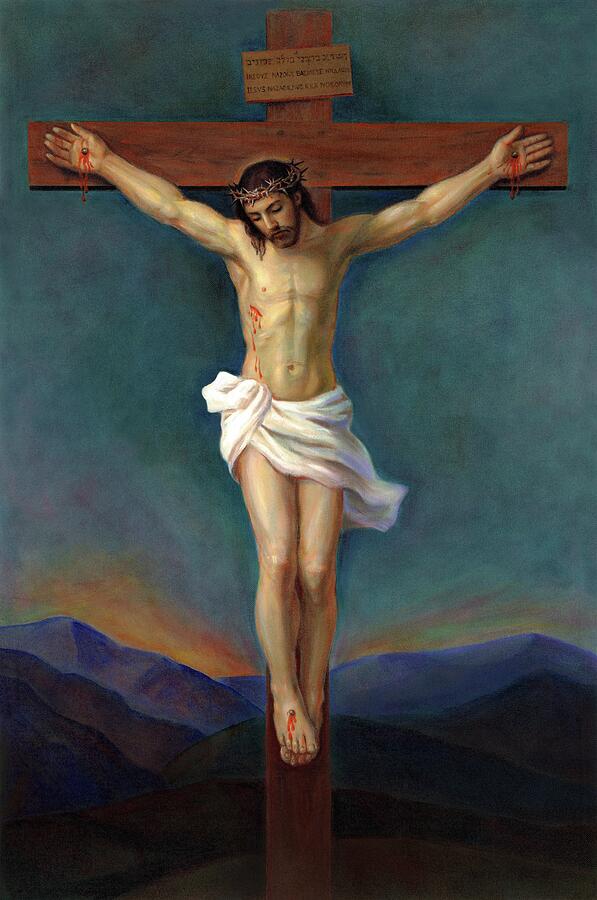
On Friday, Jesus is tried for treason. He must face Pontius Pilate who eventually orders his crucifixion for blasphemy. They beat him, and force him to carry the cross he will be crucified on up a hill. His crucifixion is known as the Passion of the Christ, because ‘passion’ means ‘suffering.’ He is nailed to the cross, and a crown of thorns is placed on his head. After he dies, his body is removed from the cross and buried in a tomb with a large rock in front of it.
On Easter Sunday, when Mary and Mary Magdalene go to pay their respects, they are unsure of what to do about moving the large rock in front of Jesus’s tomb. However, an angel moves the rock, telling them Jesus’s body is gone. His body is gone because he has risen, and this is important because it proves identity. His resurrection occurs three days after his crucifixion, and Easter Sunday is the most holy day of the year for Christians.

For such a solemn story, it may seem odd that Easter is so colorful and children get baskets from the Easter bunny and color eggs. However, the Easter bunny and the eggs are supposed to represent the coming of spring and Jesus’s resurrection because they are symbols of life.
For me, Easter meant sitting in the sound-proof room at church because church was always packed on Easter Sunday. No matter how early we left the house the church was always filled to capacity, and everyone was dressed in their very best. After church, we’d go home and change out of our fancy clothes to color eggs. I remember the smell of the vinegar, and the sound of the colored tablets fizzing in it, and dividing up the eggs so my brothers and I all had an equal amount to dye. I remember being particularly stressed about getting the dye on my fingers because I had to change back into my nice clothes, and I didn’t want to ruin them. Though it was hard for me as a child to understand if we were supposed to be happy or sad on Easter, I always loved seeing so many people at church, getting to color eggs with my brothers, and proudly handing out those eggs to my family members.


 The Junction Journal