
Gene Patenting
In June 2013, the U.S. Supreme Court ruled that naturally occurring DNA sequence is ineligible for patents, but artificially created DNA is eligible. The ruling brought great news to the scientific community, researchers, and patients. While the issues may not be considered “new,” the questions they raise still remain as interesting as ever – well, at least to me.
For some background information, DNA is composed of genes – and it takes approximately 25,000 genes to make up a single human. Each gene, as some scientists hypothesize, encodes the instruction for a particular protein or enzyme, meaning that there is a gene for brown eyes, lactase, and so on and so forth. Even though DNA consists of only four bases, Cytosine, Thymine, Guanine, and Adenine, the total number of base pairs in human DNA is three billion. Scientists, however, believe that once we are able to locate each individual gene within the 3 billion base pairs, we can understand the differences among individuals and how they relate to the health of the organism, as well as other diseases. This belief led to the development of the Human Genome Project (HGP) in the early 1990s – and the goal of the project, which is still in progress, is to map where each individual gene is located within those 3 billion base pairs in our DNA, but something happened along the way that halted the project.
In the early 2000s, a genetic company in Utah successfully located two genes – BRCA 1 and BRCA 2 – and isolated them from the rest of the DNA. A mutation in these genes significantly increase a woman’s risk of breast and ovarian cancer. The company filed a patent that covered the normal and corrupted versions of each form of the BRCA genes, as well as all the mutations and rearrangements within them. The patent – which excludes others, except for the patent holder, from having the right to use or make profit off of the patented “invention” for a period of 20 years – allows the company to make every conceivable use of the DNA, including diagnostics, therapies, drug development, and the identification of other types of cancers involving these genes. As a result, this led to a controversy among ethicists, academics, researchers, scientists, and patients.
While the company’s patent on these two genes was eventually revoked by the U.S. Supreme Court, more than 20 percent of our human genome is still currently owned by corporations, research institutes, and universities – and this raises the question that led to my working on this project: Is this kind of science even appropriate? Opponents of gene patenting argue that patenting DNA is unethical because it changes our perception of humanity and undermines human dignity, in that it treats our human genetic materials as commodities. They even made the analogy that treating our genetic materials as commodities parallels the practice of slavery. Others focus on a more financial approach by suggesting that patenting genes leads to a monopolistic economic system, proven by the aforementioned company, who jacked up the price for diagnostic tests that involve the two BRCA genes. Because some genes, according to scientists, may be responsible for more than one functions, they argue that patenting on genes impedes scientific research, because scientists cannot perform research on these two genes without being sued for patent infringement. Because the criteria for determining eligibility of patents rests on novelty, inventiveness, and usefulness, some lawyers question whether gene patenting meets one of these criteria.
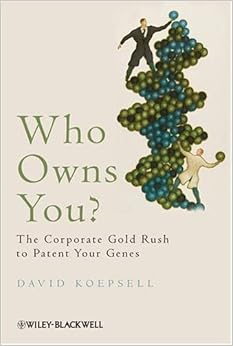
This book, however, covers an interesting angle when looking at the issue – privacy. Because the right to exclude others from having full access to their own genes interferes with one’s bodily autonomy, is gene patenting indirectly violating our right to privacy? Do our “privacy rights” extend to our genetic material? And more importantly, should our genetic material be considered a new form of privacy? Because there is no law that actually guarantees the right to privacy, and our “privacy rights” are, at most, implied through the law, could this be the time to expand on our so- called privacy laws?
– Jason
P. S. One of our former interns, Onur, has written a similar post about Intellectual Property Law – and while his post centers mostly on the unethical manipulation of IP rights by companies and briefly on genetic patenting, it is certainly worth reading!
 The Junction Journal